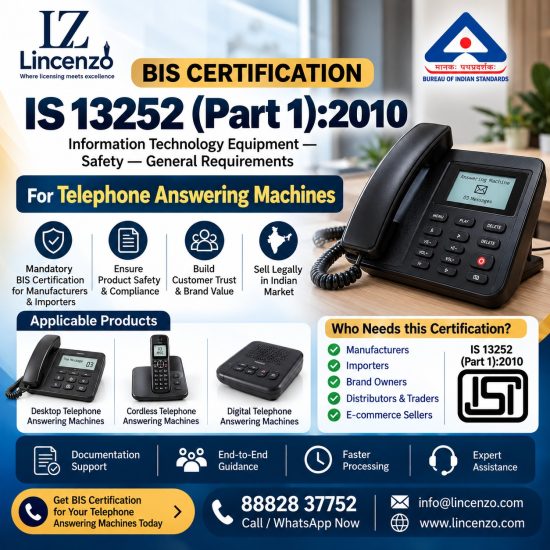
Answering machines are electronic communication devices used to receive and record voice messages when a telephone call cannot be answered. These devices can contain electronic circuits, power supply, memory components, audio systems, communication interfaces etc. Because they contain electrical and electronic components, proper safety requirements are important for reliable operation.
The standard addresses general safety concerns for covered IT equipment. Safety considerations may include protection against electric shock, insulation, electrical connections, temperature, mechanical hazards, and other possible risks depending on product design and construction.
Identification of applicable Indian Standard is an important part of product compliance for manufacturers and importers. Where BIS requirements are applicable, telephone answering machines may require proper testing and supporting technical documentation, before being placed on the Indian market.
- Key Points
- IS Code: IS 13252 (Part 1): 2010
- Telephone Answering Machines Products
- Category: IT Equipment
- Standard: Safety – Part 1: General Requirements
- Purpose: Compliance with applicable safety requirements for covered electronic equipment
- Safety Areas: Electrical Safety, Insulation, Construction, Temperature, Mechanical Protection
- Testing: The relevant requirements may require testing of applicable products
- Documentation: Technical specifications, test reports, manufacturer details and other necessary documents may be requested
- Compliance: Manufacturers and importers should ensure that they are aware of the latest applicable BIS requirements prior to marketing covered products in India
Importance of Safety Compliance
Answering machines for telephone can be connected to electrical and communication systems for long periods. Safety evaluation supports safer product design and helps to identify potential electrical and operational hazards.
Compliance with applicable requirements may also facilitate manufacturers to demonstrate compliance with applicable Indian regulatory requirements. It could build more confidence on the part of customers, distributors and business partners in the quality and safety of the product.
General BIS Compliance Process
The general process starts with the identification of the applicable product category and Indian Standard. The product can then be evaluated and tested against the relevant requirements in an applicable laboratory.
On receipt of the test report, manufacturers can prepare product specifications, technical information, company documents and other supporting records. The relevant BIS application can then be submitted for review under the applicable conformity assessment scheme.
Notes
Note 1 : IS 13252 (Part 1):2010 is applicable to a product depending upon the exact model, technical specifications, design, construction and intended use.
Note 2: BIS standards and product requirements may be revised or migrated to newer standards. Before applying for a current certificate of conformity, manufacturers and importers should check the latest BIS requirements that apply.
Note 3: Depending on the product and the applicable BIS scheme, testing, documentation and registration requirements may vary.
Conclusion
IS 13252 (Part 1):2010 sets out general safety requirements relating to applicable information technology equipment including telephone answering machines within the scope of this standard. Having knowledge about the applicable standard, carrying out tests, and technical documentation preparation assist manufacturers and importers with regulatory requirements which secure the safe and reliable performance of such electrical appliances in India.