Certification & Licensing
Trademark
Startup
Income Tax
Compliance
Certification & Licensing
Trademark
Startup
Income Tax
Compliance
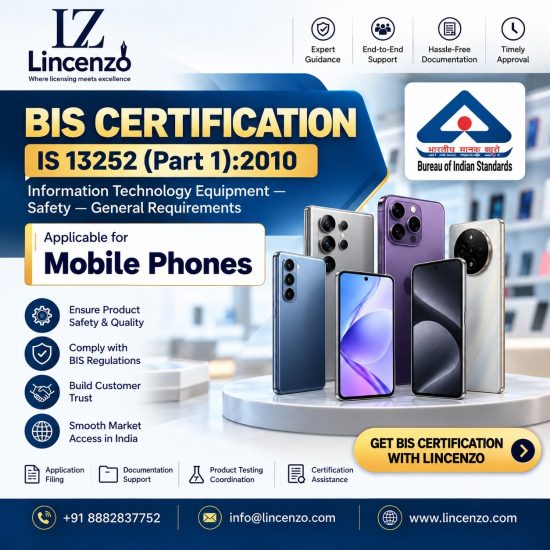
In words it is a safety guide for electronic devices. It explains:
It is a standard, which means it gives the minimum that all the devices, in its area have to follow.
1. User safety. I believe User safety is very important because phones contain lithium batteries chargers that are plugged into mains power and electronics that are packed tightly. Poor design can lead to short circuits or shocks.
2. Fire prevention. I think Fire prevention is essential because battery and charger failures are causes of electronic fires. The standard requires fire- materials and safe thermal limits to keep devices safe.
3. Product quality. I feel Product quality improves when devices are built to a recognised standard. Devices that meet these standards are more durable and reliable.
4. Consumer trust. I notice Consumer trust grows when buyers know a product has been tested against recognised safety criteria. Consumer trust helps buyers feel confident in their purchase.
5. Smoother market access. I see Smoother market access is easier, for manufacturers and importers who design to this standard. Smoother market access means fewer redesigns, recalls and delays.
6. Reduced liability. I understand Reduced liability happens when compliance lowers the risk of accidents, complaints and product withdrawals. Reduced liability protects companies from trouble.
Q1. What is IS 13252 (Part 1):2010 Safety Standard for Mobile Phones
It is a safety standard for information technology equipment, including mobile phones, covering general safety requirements.
Q2. Which international standard is it based on?
It is technically aligned with IEC 60950-1.
Q3. What hazards does it address?
Electric shock, fire, overheating, mechanical injury and unsafe materials or insulation.
Q4. Does it cover chargers and adapters?
Yes the power adapter and charger are generally assessed along with the phone.
Q5. Why is it important, for phones?
It reduces the risk of battery short circuits and fire and builds consumer trust.
Q6. Who uses this standard?
Manufacturers, importers, brand owners, test laboratories and quality engineers all rely on this standard.
Q7. How is compliance checked?
When checking compliance we test product samples in a laboratory. The laboratory tests cover strength, temperature rise, fault conditions, mechanical strength and flammability.
IS 13252 (Part 1):2010 is a important part of making mobile phones safe. For companies that make phones it is a guide for creating products that work well. For people who use phones it is the reason the phone, in your hand’s much less likely to cause harm. Whether you create phones bring them into the country. Just use one every day knowing this standard helps you make better and safer decisions.

Lincenzo is a trusted business compliance and legal services platform, helping startups, MSMEs, and enterprises simplify registrations, certifications, licenses, and regulatory compliance with expert guidance and end-to-end support.