
CRS Certification for Electronic
CRS Electronics means electronic and IT products that have to be registered under India’s Compulsory Registration Scheme (CRS). The scheme is operated by the Bureau of Indian Standards (BIS) to ensure certain electronic products conform to applicable Indian safety and quality standards. Manufacturers and businesses trading in covered products should be aware of the relevant compliance requirements before placing their products in the Indian market.
Certification & Licensing
Trademark
Startup
Income Tax
Compliance
Certification & Licensing
Trademark
Startup
Income Tax
Compliance
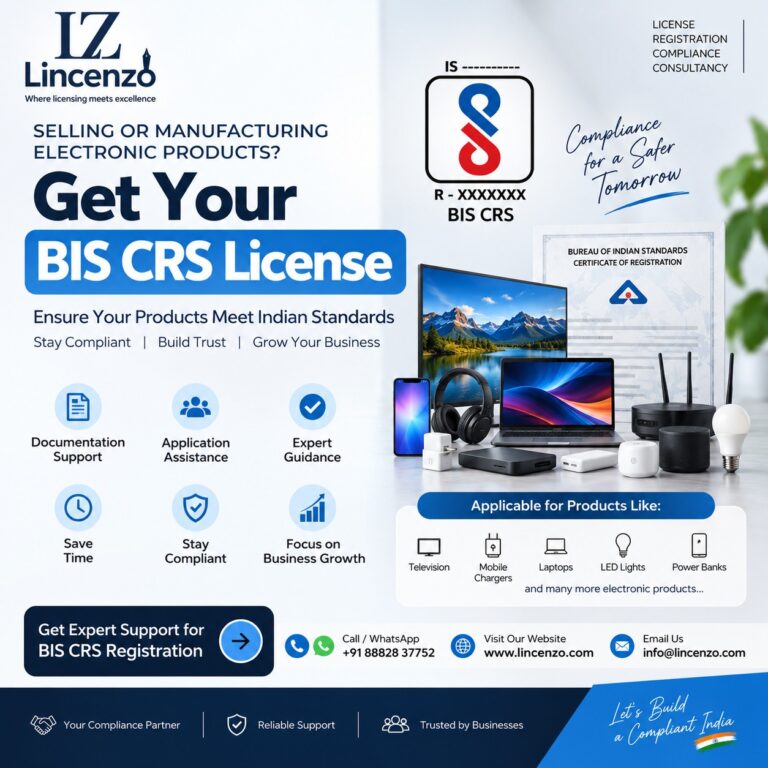
CRS Electronics refers to electronic and information technology products covered under the Compulsory Registration Scheme (CRS) of India. The scheme was introduced to ensure conformity of certain specified electronic products with the relevant Indian safety and quality standards before they are made available in the Indian market. The manufacturers of the products covered under CRS shall comply with the applicable requirements and obtain the BIS registration as required.
As the electronics industry keeps expanding, compliance with product standards has grown in importance. CRS registration helps the manufacturers in proving that their products have been tested and are in conformity with the relevant Indian standards.
Electronic products are used in large quantity in homes, offices, industries, educational institutions and many other fields. Because these products may pose electrical and safety hazards, it is necessary to comply with established safety standards to ensure consumer safety and product reliability.
Electronic product compliance helps manufacturers to ensure their products meet the applicable technical requirements. It also can help companies avoid regulatory problems and gain more confidence with distributors, retailers and customers.
Put another way, product compliance is a quality control checkpoint, ensuring that a product meets the required standards before it is delivered to consumers.
The Compulsory Registration Scheme (CRS) is a BIS conformity assessment scheme that applies to certain electronic and IT products. Manufacturers of products that fall under the purview of the relevant CRS requirements shall have to get BIS registration before manufacturing, importing, storing for sale, selling or distributing such products in India, as applicable under the regulations.
It usually involves testing the product for the relevant Indian Standard from a BIS recognized laboratory and submitting the required information and documents for registration.
The product under consideration has been tested against the relevant technical requirements as per CRS registration
Bureau of Indian Standards (BIS) is the national standards body of India and is responsible for the development and implementation of standards and systems for conformity assessment.
BIS administers the registration framework and prescribes the requirements that apply to products under CRS. Testing is conducted in laboratories approved by BIS as per the relevant Indian Standards and it is the responsibility of the manufacturers to ensure continued compliance of their products to the applicable requirements.
BIS involvement makes it easy to set up a structured system of assessment of safety and conformity of specified electronic products.
The CRS regime is applicable to various types of electronic and IT products notified by the government and the BIS. This may include products like certain television sets, monitors, computers, adapters, electronic equipment, and other notified products.
But all kinds of electronic products do not require CRS certification per se. It would depend upon the product type, notification, and Indian Standard that apply to that product.
It is important for the manufacturers to verify the current list of CRS products and Indian Standards for the concerned product.
The certification can offer several benefits to the manufacturers that have to deal with those products, which are registered according to the scheme. Among them are the following:
The certification for manufacturers is not only a piece of paper; it is a component of the overall compliance program.
Quality and safety are important elements in the production of electronic goods. Poor design and non-compliance of certain products could pose various hazards including electricity problems, overheating, malfunction, and others.
Compliance with relevant Indian Standards will enable manufacturers to come up with suitable technical and safety specifications for their products. Tests and compliance procedures can reveal certain defects before products become available to customers.
Furthermore, good quality products can enhance the customer experience and solve the problems related to faulty or defective products. Therefore, safety and compliance should be an integral part of product development.
The CRS registration process generally involves several important stages:
Step 1: Identify the applicable product category
The manufacturer first needs to determine whether the product is covered under CRS.
Step 2: Identify the applicable Indian Standard
The relevant Indian Standard for the product needs to be identified.
Step 3: Product testing
The product is tested through a laboratory recognized by BIS for the applicable requirements.
Step 4: Prepare documentation
The manufacturer prepares the required technical and business documents, including the applicable test report and manufacturer details.
Step 5: Submit the application
The application and supporting documents are submitted through the applicable BIS process.
Step 6: BIS review
BIS reviews the application and supporting information.
Step 7: Registration
If the requirements are satisfied, BIS registration is granted for the applicable product.
The exact documentation and procedure can vary depending on the product category and current regulatory requirements.
CRS requirements may include product identification, technical requirements, lab testing, documentation, application procedure, and communication with regulatory authorities. In case a business entity is unfamiliar with the procedure, the compliance process may become difficult.
Professional compliance assistance will allow a company to comprehend the compliance requirements, complete documentation, facilitate lab testing and registration process.
In other words, a compliance expert can become a guide in a complicated road map, whereby the company does not have to find the proper way independently but will have an opportunity to do it under professional guidance.
However, a company has to make sure that all data provided in the process of certification are correct and the product meets the requirements of the relevant standards.
CRS Certification is a compliance requirement for electronic/IT products which are subject to India’s Compulsory Registration Scheme. It ensures that the concerned products comply with the relevant Indian Standards in terms of safety and quality prior to release into the market.
The manufacturer must find out if the product is subjected to CRS, the appropriate Indian Standard, perform the necessary tests, prepare documentation and register with BIS.
It is through focusing on product compliance, testing, quality and safety that the manufacturers of electronic products will be able to meet the relevant requirements and build customer confidence.
Lincenzo is a trusted business compliance and legal services platform, helping startups, MSMEs, and enterprises simplify registrations, certifications, licenses, and regulatory compliance with expert guidance and end-to-end support.