
Blog - lincenzo

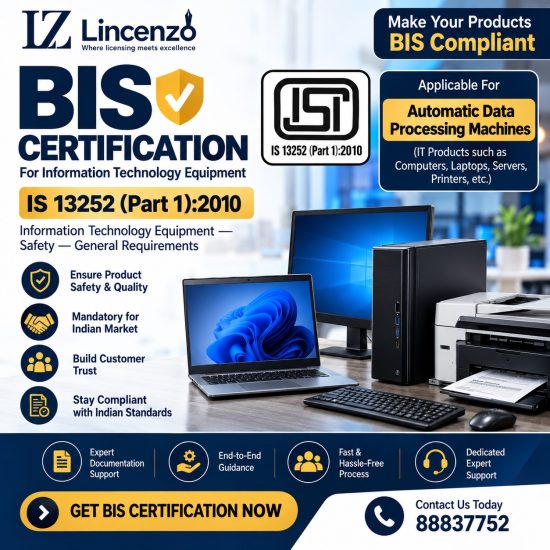
IS 13252(Part 1) : 2010 – Automatic Data Processing Machines

IS 13252(part 1): 2010 Information Technology Equipment Safety Part 1: General Requirements It defines safety requirements for information technology equipment and applies to products intended for the processing, storage, transmission or handling of information. Automatic Data Processing Machines are electronic devices that accept data, process the data as per programd instructions, store information and produce or communicate the resulting information. For example, certain computers and other data-processing equipment that are within the applicable product scope.

Vendor Registration

Rated at 4.9 By 43034 + Customers Globally

Certification & Licensing

Trademark

Startup

Income Tax

Compliance
https://lincenzo.com/bis-certification/

Automatic Data Processing Machines are electronic data processing systems designed to accept, process, store, retrieve, and communicate information automatically. This may include computers and other data processing equipment depending on their design and intended use.

The standard concerns applicable safety requirements for IT equipment. These requirements are intended to address safety considerations such as electrical protection, insulation, temperature, construction and protection against possible risks during normal and specified abnormal operation ,IS 13252(Part 1): 2010 – Automatic Data Processing Machines


  • Take-Home Points
    IS Code: IS 13252 (Part 1): 2010
  • Product: Machines for automatic data processing
  • Category: Information Technology Hardware
  • Standard: Information Technology Equipment – Safety  : General Requirements
  • Scheme : BIS Compulsory Registration Scheme (CRS)
  • Purpose: To address the applicable safety requirements for IT equipment
  • Testing: The applicable products are tested according to the applicable requirements.
  • Documentation: Product specifications, test reports, manufacturer data and other paperwork may be required.
  • Compliance: Covering the requirements of the relevant BIS before putting the covered products on the market in India.


CRS Compliance Process

The process generally is as follows: Identify the applicable standard -> Product testing -> Getting the test report -> Documentation -> Filing the BIS application -> BIS review -> Registration (subject to applicable requirements).

Benefits

CRS compliance can help manufacturers meet applicable regulatory requirements, demonstrate conformity with relevant Indian Standards, and increase confidence among customers and business partners.

Important: IS 13252(Part 1) :2010 is a historical CRS reference. BIS has subsequently introduced newer standards and migration requirements for various IT and electronic products. Businesses applying for certification today should verify the latest applicable BIS CRS requirements before proceeding.

Conclusion

IS 13252(Part 1) :2010 – Information Technology Equipment – Safety : General Requirements is an important Indian Standard for safety of applicable information technology equipment including Automatic Data Processing Machines. The standard establishes a framework for dealing with safety considerations related to relevant IT equipment.

Relevant product manufacturers and importers should be aware of the BIS requirements, determine the correct product category, conduct necessary testing, prepare the correct documentation and follow the applicable registration procedure.