
RNI Registration in India: A Practical Guide for New Publishers
Launching a newspaper, magazine, journal, or other periodical requires more than choosing a publication name and arranging a printing facility. Publishers also need to understand the applicable registration and publication requirements. In India, the regulatory framework for periodicals is now administered by the Press Registrar General of India (PRGI) under the Press and Registration of Periodicals Act, 2023. Many people still commonly use the term RNI Registration when referring to periodical registration. For new publishers, understanding the current process can make it easier to organize the required information and complete the application correctly.
Certification & Licensing
Trademark
Startup
Income Tax
Compliance
Certification & Licensing
Trademark
Startup
Income Tax
Compliance
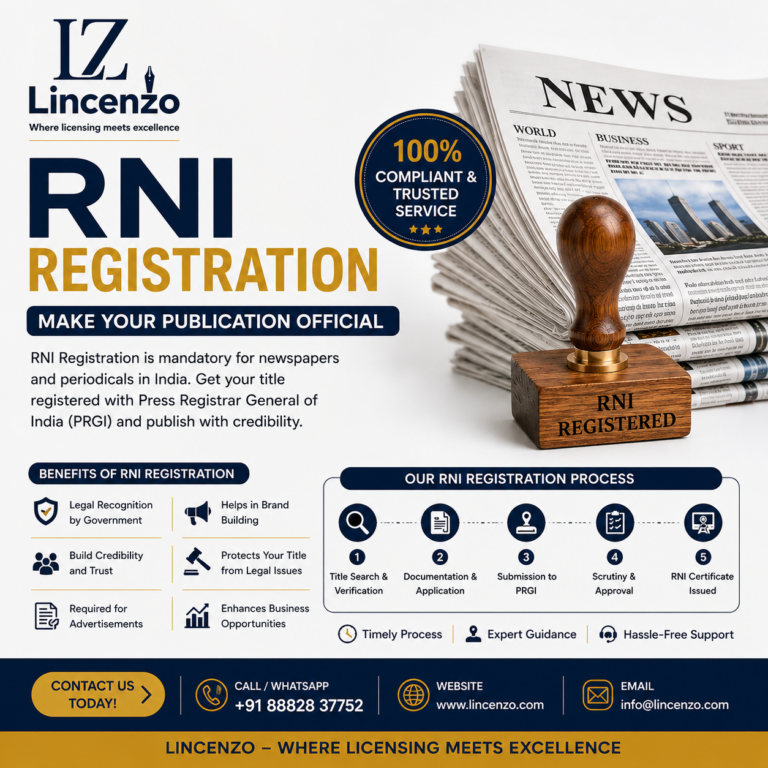
RNI Registration is the commonly used term for the registration of newspapers and periodicals in India. The current system operates through the PRGI and its online Press Sewa Portal.
A periodical may include publications such as newspapers, magazines, journals, and other publications that are issued periodically and contain public news or comments on public news, subject to the applicable legal definition.
Before starting publication, publishers should understand the registration requirements applicable to their proposed publication.
Registration helps establish the legal identity of a periodical and records important information associated with the publication.
The registration process can involve details relating to:
Maintaining accurate information is important because changes in publication details may require appropriate updates or compliance under the applicable framework.
Selecting a title is one of the important early steps for a new publication. Publishers should not simply select a name because it sounds attractive or matches their business name.
The proposed title needs to be considered against the applicable title guidelines. Similarity with existing registered titles can create difficulties during the title evaluation process.
A publisher should therefore research existing titles and carefully prepare the proposed title before beginning the registration process.
The exact requirements depend on the application and circumstances of the publication. Publishers should generally be prepared with information concerning the owner, publisher, publication, language, periodicity, place of publication, and printing arrangements.
Having consistent information across documents and the online application can help reduce avoidable issues during processing.
The Press Sewa Portal provides an online system for periodical-related registration processes. Applicants can use the portal to create profiles, provide publication details, submit applications, and track relevant application information.
The move toward an online process has made it important for publishers to understand the digital filing requirements before starting their application.
Applicants should carefully review each field before submission and ensure that the information entered matches the supporting documents and publication details.
A newspaper or periodical may involve several parties, including the owner, publisher, and printer. Each role can have specific responsibilities within the registration and publication framework.
The publisher is responsible for publication-related activities, while printing arrangements involve the printing press. Correctly providing information about these parties is therefore an important part of preparing the application.
First-time publishers may face difficulties because they are unfamiliar with the registration procedure. Some common issues can include incomplete information, incorrect details, unsuitable titles, documentation gaps, and confusion about the roles of different parties involved in publication.
Another common mistake is assuming that registration is the only compliance requirement. Publishers should also understand the obligations that apply after registration and publication.
Preparing a periodical registration application can involve multiple details. Professional assistance can help publishers understand the process, organize information, prepare documentation, and navigate the online application system.
Lincenzo provides assistance for RNI Registration in India, including guidance related to application preparation and periodical registration requirements.
Businesses and individuals planning to launch a newspaper or magazine can review the available service information and determine the requirements applicable to their publication.
Starting a newspaper or magazine can be a significant publishing project. Proper preparation before submitting a registration application can help new publishers understand the process and avoid unnecessary mistakes.
From selecting a suitable title to preparing publisher and printing information, every stage requires attention to detail. Understanding the current PRGI framework and Press Sewa Portal can help publishers approach the registration process in a more organized way.
For those planning to establish a newspaper, magazine, journal, or other eligible periodical, obtaining appropriate professional guidance can make the registration process easier to understand and manage.

Lincenzo is a trusted business compliance and legal services platform, helping startups, MSMEs, and enterprises simplify registrations, certifications, licenses, and regulatory compliance with expert guidance and end-to-end support.