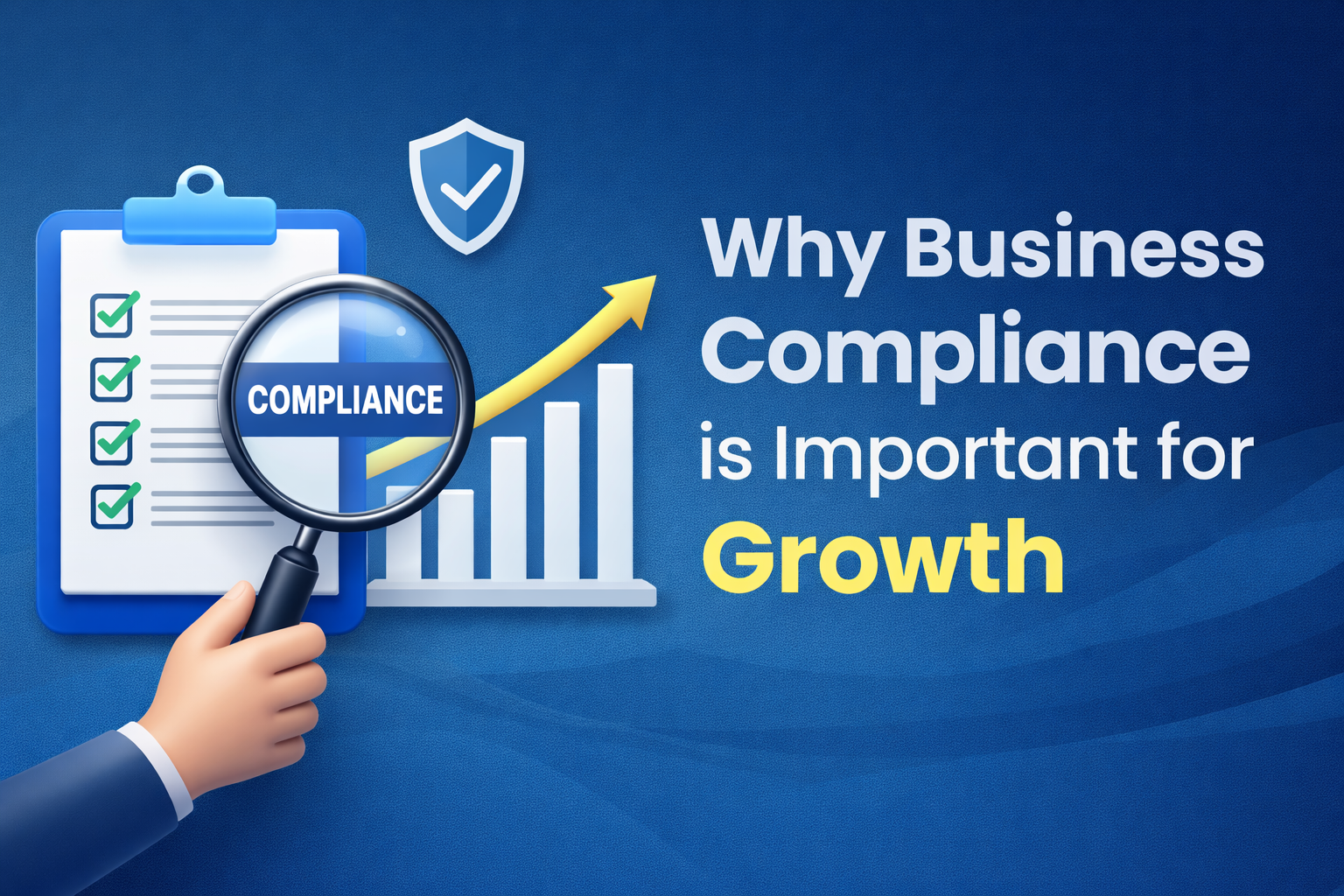
Why Business Compliance is Important for Growth — Step-by-Step Guide (2026)
In today’s competitive business environment, compliance is no longer just a legal obligation — it is a strategic advantage. Business compliance refers to the process of following all applicable laws, regulations, standards, and ethical practices required to operate legally. Whether it involves company registration, tax filings, licenses, certifications, or industry-specific approvals, compliance plays a crucial role in ensuring sustainable business growth. Many entrepreneurs consider compliance as a burden or unnecessary expense, especially during the early stages of a business. However, in reality, strong compliance practices help businesses build credibility, reduce risks, attract investors, and create long-term success opportunities. This article explains why business compliance is important for growth and how it directly impacts the success of an organization.

Rated at 4.9 By 43034 + Customers Globally
Certification & Licensing
Trademark
Startup
Income Tax
Compliance
Certification & Licensing
Trademark
Startup
Income Tax
Compliance
Certification & Licensing
Trademark
Startup
Income Tax
Compliance
Certification & Licensing
Trademark
Startup
Income Tax
Compliance
One of the biggest advantages of maintaining compliance is trust. Customers, investors, partners, and government authorities are more likely to trust a business that operates legally and transparently.
For example:
A company with proper registrations and licenses appears more professional.
Compliance with tax regulations builds financial credibility.
Certifications such as ISO, BIS, or industry approvals increase brand reputation.
Trust is the foundation of business growth. Without credibility, attracting clients or partnerships becomes difficult.
Non-compliance can lead to serious consequences, including:
Heavy fines and penalties
Business suspension or closure
Legal disputes
Loss of reputation
These risks can severely impact business operations and financial stability. Compliance acts as a safety shield that protects the company from unnecessary legal troubles and unexpected losses.
Investing in compliance early is always cheaper than paying penalties later.
If a business wants to expand into new markets, states, or industries, compliance becomes essential. Many opportunities require businesses to meet regulatory requirements before they can operate or scale.
For example:
Government contracts require proper registrations and certifications.
Expanding to another state may require additional licenses.
International trade requires export compliance.
A compliant business is always ready for growth opportunities without delays.
Investors and financial institutions prefer businesses that follow legal and financial regulations properly. Compliance ensures:
Transparent financial records
Proper taxation
Legal business structure
Risk management systems
When a business is compliant, investors feel confident that their money is secure. This increases the chances of securing funding, loans, or partnerships.
Startups especially benefit from compliance because it improves valuation and credibility.
Compliance often requires businesses to maintain proper documentation, processes, and systems. This indirectly improves operational efficiency by:
Creating organized workflows
Improving financial tracking
Reducing errors
Enhancing accountability
A well-structured business operates more efficiently and is better prepared for growth.
In today’s digital world, reputation matters more than ever. A single compliance violation can damage a company’s image permanently.
On the other hand, businesses that follow regulations and ethical practices gain positive recognition. Certifications, licenses, and legal approvals act as proof of professionalism and quality standards.
Customers prefer brands they can trust.
Growth is not just about increasing revenue; it is about sustaining success over time. Compliance ensures that a business is built on a strong legal foundation, which reduces risks and supports long-term stability.
Companies that ignore compliance may grow quickly initially but often face problems later due to legal issues or regulatory actions.
Sustainable growth always requires compliance.
Many businesses miss opportunities because they lack proper compliance. Government tenders, GeM registration, and public sector contracts require businesses to meet regulatory standards.
Compliance opens doors to:
Government projects
Subsidies and schemes
Tax benefits
Industry approvals
These opportunities can significantly boost business growth.
Employees prefer working in organizations that follow legal standards, provide proper contracts, and comply with labor laws. Compliance creates a safe and professional work environment, which improves employee satisfaction and retention.
A strong workforce contributes directly to business growth.
Compliance helps businesses identify and manage risks early. This includes financial risks, legal risks, operational risks, and reputational risks.
Risk management is a key factor in scaling any business successfully.
Businesses in India usually need compliance in areas such as:
Company Registration (Private Limited, LLP, OPC)
GST Registration and Tax Filing
Trade License / Shop Act
Industry-specific Licenses (PSARA, FSSAI, Pollution NOC)
Certifications (ISO, BIS, STQC)
Labor Law Compliance
Annual ROC Filings
Maintaining these compliances ensures smooth business operations.
Business compliance is not just about following rules — it is about creating a strong foundation for growth. A compliant business gains trust, avoids risks, attracts investors, and unlocks new opportunities. It improves operational efficiency, strengthens reputation, and supports long-term sustainability.
In simple terms, compliance is an investment in the future of your business.
Entrepreneurs who prioritize compliance from the beginning are more likely to succeed and grow faster in the competitive market.
If you want your business to scale confidently and legally, compliance should always be your top priority.
We are India’s trusted business service provider, helping entrepreneurs and companies with registrations, licenses, compliance, and certifications. From startup to scale-up, we ensure hassle-free, fast, and reliable solutions for all your business needs.
Serving Partners

Quick Links
Services
Payment Methods
Get In Touch
Lincenzo Private Limited
Mon - Sat: 10:00 AM - 06:45 PM
Sunday : Closed
Need Help? Contact Us

Lincenzo Private Limited All Right Reserved | Privacy Policy
Rated at 4.9 By 43034 + Customers Globally